Looks like you're in [country-name]. Switch to the [site-name] for local equipment and services?

Go to [site-name]
Stay here
  • 1800 87 4473
  • English

    Australasia

    • Australia

    Europe

    • Deutsch
    • English
    • Français
    • Nederlands

    North America

    • English
    • Español
    • Français
United Rentals Home
  • Hire Equipment
    • ALL EQUIPMENT
    • Excavators
    • Loaders
    • Pumps
    • Shipping Containers
    • Shoring Boxes
    • Telehandlers
    • Tilt Props
    • VIEW ALL
    • Rental Protection Plan (RPP)
    • Rental Resources
  • Shipping Containers
    • ALL EQUIPMENT
    • Shipping Containers
    • Worksite Facilities
    • Refrigerated Containers
    • Dangerous Goods
    • Intermodal & Freight
    • Self-Storage
    • Container Resources
    • Custom Modifications
    • Hire vs Buy
  • Sales
    • ALL EQUIPMENT
    • Excavators
    • Loaders
    • Telehandlers
    • Shipping Containers
    • VIEW ALL
  • Solutions
    • Specialty Solutions
    • Bespoke Fabrication
    • Container Modifications
    • Dewatering
    • Engineering
    • Laser Calibration
    • Rigging and Installation
    • Relocations
    • Self-Storage
    • Shoring & Propping On-site Support
    • Shoring & Propping Transport Fleet
    • Worksite Facilities
    • Emergency Solutions
    • Emergency Response
  • Resources
    • Product & Technical Resources
    • Product checklists
    • Hire vs Buy Containers Guide
    • Container Modifications
    • Catalogues
    • Customer Support
    • Account Opening
    • Mobile App
    • Rental Protection Plan
    • Scams Alert
    • Insights & Case Studies
    • Project Uptime Blog
    • Case Studies
  • Total Control
    • About Total Control
    • Account Dashboard
    • Items on Rent
    • UR Mobile App
  • Find a Branch
    • ACT
    • NSW
    • NT
    • QLD
    • SA
    • TAS
    • VIC
    • WA
  • Company
    • About Us
    • Investor Relations
    • Careers
    • Press Releases
    • Project Uptime Blog
    • Contact us
  • Project Uptime
  • Equipment
  • Data
  • Safety
  • Expertise
  • All Categories
Workers installing safety barriers on a road construction site to prevent vehicle collisions.

What is MASH Testing and why is it important?

September 21, 2020
  • Tips and Guides

You might have heard the term ‘MASH’ in reference to safety barriers, but what does this actually mean? 

In a nutshell, choosing a hire partner that supplies MASH Tested road barriers ensures you are getting the safest barrier for your project – both for your team and also for the general public. 


What does MASH Tested mean? 

MASH stands for Manual for Assessing Safety Hardware, and it is a set of testing procedures, guidelines and conditions that are produced by the American transport organisation AASHTO.

This manual provides a set of standard tests for a range of different road safety equipment including steel guardrails, truck-mounted attenuators, crash cushions, concrete jersey barriers and plastic water barriers.

In Australia, we adopt the American guidelines because they are referred to in the Australian Standard as the preferred testing method. Up until recently, we used a different American test method known as NCHRP350, however, local safety policy has been updated and MASH barrier testing is now the preferred method.

So, if your barrier doesn’t have a MASH rating, it might not be as safe as you think.


Why is MASH testing important?  

Australia’s peak governing body for roads, Austroads, reports that crashes where a vehicle runs off the road are one of the most common in urban environments.

Because of this, road barriers must be rigorously tested to ensure they will perform in real-life crash situations. The design, shape, weight and construction of the barriers all combine to result in a product that intentionally redirects out-of-control vehicles in a very specific way.

MASH approved barriers are guaranteed to perform predictably on impact by preventing errant vehicles from leaving the roadway. Rather than careening off the road and into the work zone, vehicles are redirected in line with the flow of traffic, which creates a safer environment for both motorists and contractors working in the road corridor.


How are road barriers tested?

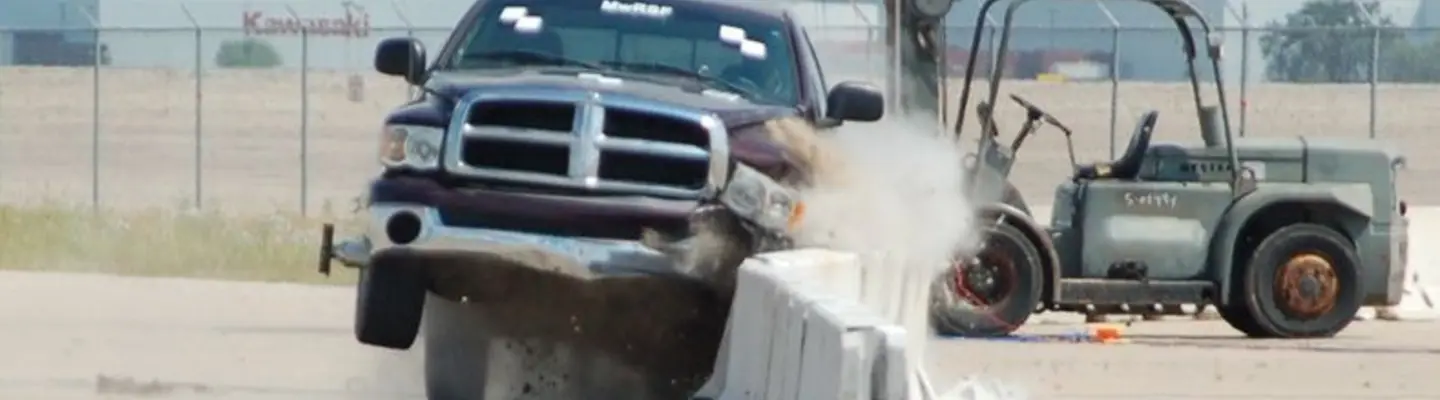
Concrete jersey barriers and plastic barriers are tested in real-life, full-scale tests. The barriers are installed in a controlled environment and then a car or truck veers into them at high speed.

The behaviour of the barrier at the moment of impact is scrutinised, and it is then given a MASH test level rating.

These are expressed as TL-1 through to TL-6, with the lower range being suitable for slow vehicles and pedestrian safety, and the higher range being suitable for fast-moving and very heavy vehicles. The faster the posted speed limit on the roads around your site, the higher the MASH rating needs to be to keep your team safe.

A concrete jersey barrier such as the Deltabloc DB80 available from Orange Hire is MASH approved to TL-3. This means it has been tested by being hit with a 2270kg ute travelling at 100km per hour, impacting the barrier at an angle of 25 degrees.

As another example, the Armorzone plastic water filled barrier has been tested to meet MASH TL-2. It has also been tested with a 2270kg ute travelling a little slower at 70km per hour.


Pure carnage! Watch these MASH tests from around the world: 

To give you an idea of how MASH testing works in real life, take a look at these videos showing full-scale tests of guardrails and other types of safety devices from other countries.

Rolling Guardrail MASH TL4 Big Truck Test

Wire Crash Barrier Test at 101.4 Km/h

Crash Cushion – MASH TL 3 Test

MASH TL-3 Crash Tested Noise Barrier System

Note in each video that it is the angle of deflection (how and where the car is redirected to) and how much the whole railing or barrier shifts, that help determine its final test result.

You’ll also see the intentional sideways shift of the barrier as it absorbs and dissipates the energy of the impact. This is what helps to determine the ‘working width’ of the barrier. Working width is how much space needs to be maintained between the barrier on the road shoulder, and your crew in the work zone.


So how do you know which barriers are right for your project? 

For advice and assistance with finding the best jersey barrier or water filled barrier that will keep your team safe, get in touch with Orange Hire. Our crash barriers have undergone independent crash testing to MASH guidelines so you can have confidence and trust in their safety. We have a range of different MASH Tested barriers for different speed zones, all available for short or long term hire.

  • Facebook Facebook
  • X X
  • Linkedin Linkedin
  • Email Email
  • Print Print
  • Copy Link Copy Link
  • RSS Feed RSS Feed

Was this article helpful?

Yes No

Trending Articles

Auger Drives & Drills Extensions Hire
Rockbreaker Hire

Related Equipment

  • Facebook
  • Linkedin
  • X
  • Youtube

1800 87 4473

  • Mobile App
    • Download for Android
    • Download for Apple
    • [email protected]
  • Equipment
    • Hire Equipment
    • Buy Equipment
    • Self Storage
    • Open an Account
    • Download Catalogues
  • Services & Solutions
    • Container Modifications
    • Dewatering
    • Engineering
    • Relocations
    • Rigging & Installation
  • Locate Us
    • New South Wales
    • Queensland
    • Victoria
    • South Australia
    • Western Australia
    • Northern Territory
    • Australian Capital Territory
    • Tasmania
  • Quick Links
    • Contact us
    • Request a quote
    • Scam alert
    • Credit application form
    • Explore all Resources
  • About Us
    • Careers
    • Our history
    • Investor relations
  • Privacy Policy
  • Terms of Use
  • Legal Terms and Conditions
  • Equipment Directory
  • Branch Directory
  • United Rentals Australia PTY LTD (ABN 38 069 244 417)
United Rentals Home
  • 1800 87 4473
  • English

    Australasia

    • Australia

    Europe

    • Deutsch
    • English
    • Français
    • Nederlands

    North America

    • English
    • Español
    • Français

AU Main Navigation

  • Hire Equipment
    • ALL EQUIPMENT
    • Excavators
    • Loaders
    • Pumps
    • Shipping Containers
    • Shoring Boxes
    • Telehandlers
    • Tilt Props
    • VIEW ALL
    • Rental Protection Plan (RPP)
    • Rental Resources
  • Shipping Containers
    • ALL EQUIPMENT
    • Shipping Containers
    • Worksite Facilities
    • Refrigerated Containers
    • Dangerous Goods
    • Intermodal & Freight
    • Self-Storage
    • Container Resources
    • Custom Modifications
    • Hire vs Buy
  • Sales
    • ALL EQUIPMENT
    • Excavators
    • Loaders
    • Telehandlers
    • Shipping Containers
    • VIEW ALL
  • Solutions
    • Specialty Solutions
    • Bespoke Fabrication
    • Container Modifications
    • Dewatering
    • Engineering
    • Laser Calibration
    • Rigging and Installation
    • Relocations
    • Self-Storage
    • Shoring & Propping On-site Support
    • Shoring & Propping Transport Fleet
    • Worksite Facilities
    • Emergency Solutions
    • Emergency Response
  • Resources
    • Product & Technical Resources
    • Product checklists
    • Hire vs Buy Containers Guide
    • Container Modifications
    • Catalogues
    • Customer Support
    • Account Opening
    • Mobile App
    • Rental Protection Plan
    • Scams Alert
    • Insights & Case Studies
    • Project Uptime Blog
    • Case Studies
  • Total Control
    • About Total Control
    • Account Dashboard
    • Items on Rent
    • UR Mobile App
  • Find a Branch
    • ACT
    • NSW
    • NT
    • QLD
    • SA
    • TAS
    • VIC
    • WA
  • Company
    • About Us
    • Investor Relations
    • Careers
    • Press Releases
    • Project Uptime Blog
    • Contact us