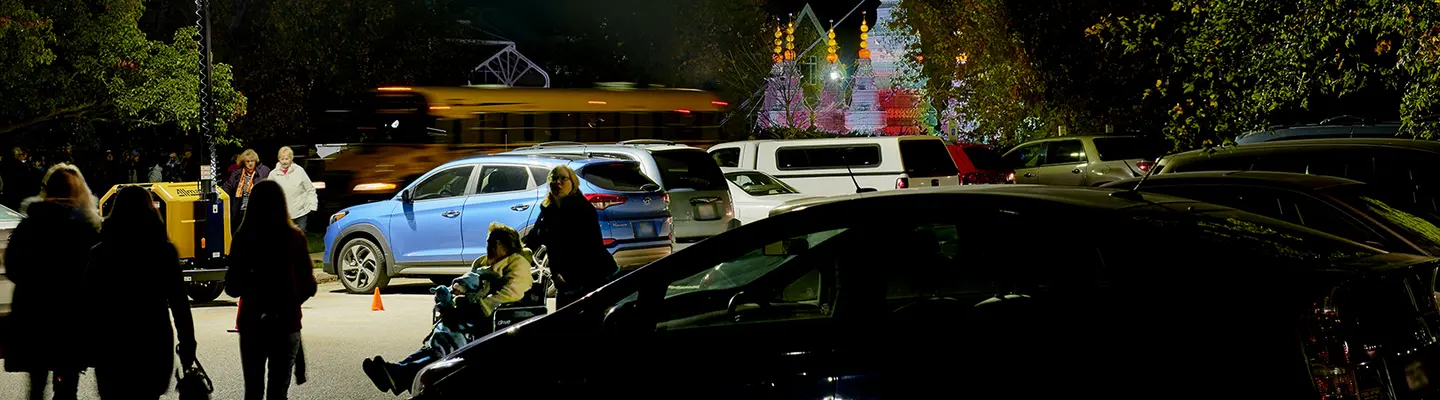
Proper lighting is critical to safety, security and visibility at festivals, fairs, concerts, sporting events and other large outdoor events. Choosing the right type of lights for each event area is key. This guide is designed to help you identify suitable event lighting rentals for your outdoor event lighting needs, as well as the power sources and types of bulbs that make the most sense.
Three main types of portable lights and where to use them
The size, type and layout of the event will influence the portable lights you need to help ensure your event goes off without a hitch. When renting lights for events, you have three main options. Most events require more than one type of light.
Portable light towers for broad and bright illumination
Large, open spaces may need bright, far-reaching light for event security and safety. Portable light towers are often a good option for areas such as:
- Parking lots
- Event entrances
- Staging areas
Light towers have a vertical mast that holds multiple powerful lights. Masts are typically extendable; some extend to 30 feet or more. Towable models are towed into place. Skid mounted light towers can be moved around the event site with a forklift.
The largest portable light stands can light up an area as large as 53,000 square feet.
Balloon lights for diffuse, low-glare light
Most events have areas that call for diffuse light that’s easy on the eyes. These areas may include:
- Event tents
- Walkways
- Registration tables
- First aid stations
Balloon lights are often a good choice for these spaces. They emit light in all directions. Weather-resistant inflatable fabric globes over the bulbs reduce shadows and glare.
You can rent a balloon light that comes with a stand or a cart. Mast heights are typically around 10 to 13 feet. Coverage areas range from around 60 square feet to 145 square feet. The most powerful balloon lights attach to a light tower.
Light stands for focused, bright light
Light stands provide bright, focused light for spotlighting or floodlighting. Quick to set up, they are often good choices for:
- Security checkpoints
- Stages
- Backstage areas
- Event setup and teardown areas
Some come with tripod bases that are easily adjusted for uneven surfaces. Heavier, taller light stands have weighted bases designed to keep them steady in windy conditions. Light stands with wheeled bases work well on smooth surfaces.
Choosing a power source
In many cases, you’ll have a choice of power source for your outdoor event lighting equipment: diesel, electric, battery or solar. Ventilation, noise and energy efficiency all come into play when choosing a power source.
Diesel-powered lights
Some portable lights are powered by an onboard diesel generator. Diesel generators have their advantages: They can be used in off-grid areas, they can run overnight—and sometimes for multiple days—on a full tank, and they provide a lot of power. Large light towers run on diesel.
Because of the exhaust they emit, they must be placed in well-ventilated outdoor spaces. They can be noisy and smelly, so you’ll want to keep them away from areas where guests congregate.
Electric lights
Typically lighter in weight than diesel-powered lights, AC electric lights have a power cord and plug into a power outlet. They don’t produce exhaust and can be safely used in enclosed spaces. They are cost-effective to run and nearly silent.
If there’s no power outlet nearby, electric lights can be plugged into a generator and used in well-ventilated outdoor areas.
Battery-powered lights
Some portable lights, including smaller light towers, come in cordless, battery-powered models. If your site lacks electricity, battery-powered lights are perfect for lighting tents, walkways and other relatively small areas.
Solar lights
In locations with consistent sunlight, solar lights such as this solar light tower may be a viable option for low- or moderate-intensity lighting needs. Solar lights convert sunlight to electrical energy and store it in a battery. They are silent and sustainable. Best of all, sunlight is free. Solar lights are best used during months with plenty of daylight.
Choosing a bulb type
Rental lights for events often have different bulb options. The type of bulb affects brightness and energy consumption.
LED bulbs
LED bulbs are excellent choices in many cases. They are extremely energy efficient, have long lifespans and turn on instantly, with no warmup period. They do not get hot to the touch.
Metal halide bulbs
Metal halide lights provide high-intensity light over large areas. They are commonly used to light stadiums and streets. The downsides: They are not as energy efficient as LEDs and can take up to 15 minutes to warm up.
Quartz and halogen bulbs
The bulbs, used in some portable light stands, are very bright and turn on immediately. However, they are extremely hot to the touch and less energy efficient than other bulbs.
Professional help with outdoor event lighting
Choosing the best size, type and number of portable lights for an outdoor event can be complicated. A vendor with deep experience helping customers light different kinds of events can provide information to help you evaluate the options based on your event type, duration, size, layout and budget.
United Rentals offers a large inventory of portable lights as well as lighting expertise and 24/7 support. Event producers who choose United Rentals for event light rentals can streamline equipment procurement by also tapping United Rentals for temporary fences, event generators, ground protection mats, two-way radios, portable restrooms, cooling fans, tent heaters and other event infrastructure needs.
To plan lighting for your next event, explore our inventory of lighting equipment by type.Proper lighting is critical to safety, security and visibility at festivals, fairs, concerts, sporting events and other large outdoor events. Choosing the right type of lights for each event area is key. This guide is designed to help you identify suitable event lighting rentals for your outdoor event lighting needs, as well as the power sources and types of bulbs that make the most sense.
Three main types of portable lights and where to use them
The size, type and layout of the event will influence the portable lights you need to help ensure your event goes off without a hitch. When renting lights for events, you have three main options. Most events require more than one type of light.
Portable light towers for broad and bright illumination
Large, open spaces may need bright, far-reaching light for event security and safety. Portable light towers are often a good option for areas such as:
- Parking lots
- Event entrances
- Staging areas
Light towers have a vertical mast that holds multiple powerful lights. Masts are typically extendable; some extend to 30 feet or more. Towable models are towed into place. Skid mounted light towers can be moved around the event site with a forklift.
The largest portable light stands can light up an area as large as 53,000 square feet.
Balloon lights for diffuse, low-glare light
Most events have areas that call for diffuse light that’s easy on the eyes. These areas may include:
- Event tents
- Walkways
- Registration tables
- First aid stations
Balloon lights are often a good choice for these spaces. They emit light in all directions. Weather-resistant inflatable fabric globes over the bulbs reduce shadows and glare.
You can rent a balloon light that comes with a stand or a cart. Mast heights are typically around 10 to 13 feet. Coverage areas range from around 60 square feet to 145 square feet. The most powerful balloon lights attach to a light tower.
Light stands for focused, bright light
Light stands provide bright, focused light for spotlighting or floodlighting. Quick to set up, they are often good choices for:
- Security checkpoints
- Stages
- Backstage areas
- Event setup and teardown areas
Some come with tripod bases that are easily adjusted for uneven surfaces. Heavier, taller light stands have weighted bases designed to keep them steady in windy conditions. Light stands with wheeled bases work well on smooth surfaces.
Choosing a power source
In many cases, you’ll have a choice of power source for your outdoor event lighting equipment: diesel, electric, battery or solar. Ventilation, noise and energy efficiency all come into play when choosing a power source.
Diesel-powered lights
Some portable lights are powered by an onboard diesel generator. Diesel generators have their advantages: They can be used in off-grid areas, they can run overnight—and sometimes for multiple days—on a full tank, and they provide a lot of power. Large light towers run on diesel.
Because of the exhaust they emit, they must be placed in well-ventilated outdoor spaces. They can be noisy and smelly, so you’ll want to keep them away from areas where guests congregate.
Electric lights
Typically lighter in weight than diesel-powered lights, AC electric lights have a power cord and plug into a power outlet. They don’t produce exhaust and can be safely used in enclosed spaces. They are cost-effective to run and nearly silent.
If there’s no power outlet nearby, electric lights can be plugged into a generator and used in well-ventilated outdoor areas.
Battery-powered lights
Some portable lights, including smaller light towers, come in cordless, battery-powered models. If your site lacks electricity, battery-powered lights are perfect for lighting tents, walkways and other relatively small areas.
Solar lights
In locations with consistent sunlight, solar lights such as this solar light tower may be a viable option for low- or moderate-intensity lighting needs. Solar lights convert sunlight to electrical energy and store it in a battery. They are silent and sustainable. Best of all, sunlight is free. Solar lights are best used during months with plenty of daylight.
Choosing a bulb type
Rental lights for events often have different bulb options. The type of bulb affects brightness and energy consumption.
LED bulbs
LED bulbs are excellent choices in many cases. They are extremely energy efficient, have long lifespans and turn on instantly, with no warmup period. They do not get hot to the touch.
Metal halide bulbs
Metal halide lights provide high-intensity light over large areas. They are commonly used to light stadiums and streets. The downsides: They are not as energy efficient as LEDs and can take up to 15 minutes to warm up.
Quartz and halogen bulbs
The bulbs, used in some portable light stands, are very bright and turn on immediately. However, they are extremely hot to the touch and less energy efficient than other bulbs.
Professional help with outdoor event lighting
Choosing the best size, type and number of portable lights for an outdoor event can be complicated. A vendor with deep experience helping customers light different kinds of events can provide information to help you evaluate the options based on your event type, duration, size, layout and budget.
United Rentals offers a large inventory of portable lights as well as lighting expertise and 24/7 support. Event producers who choose United Rentals for event light rentals can streamline equipment procurement by also tapping United Rentals for temporary fences, event generators, ground protection mats, two-way radios, portable restrooms, cooling fans, tent heaters and other event infrastructure needs.
 Facebook
 X
 Linkedin
 Email
 Print
 Copy Link
 RSS Feed

